


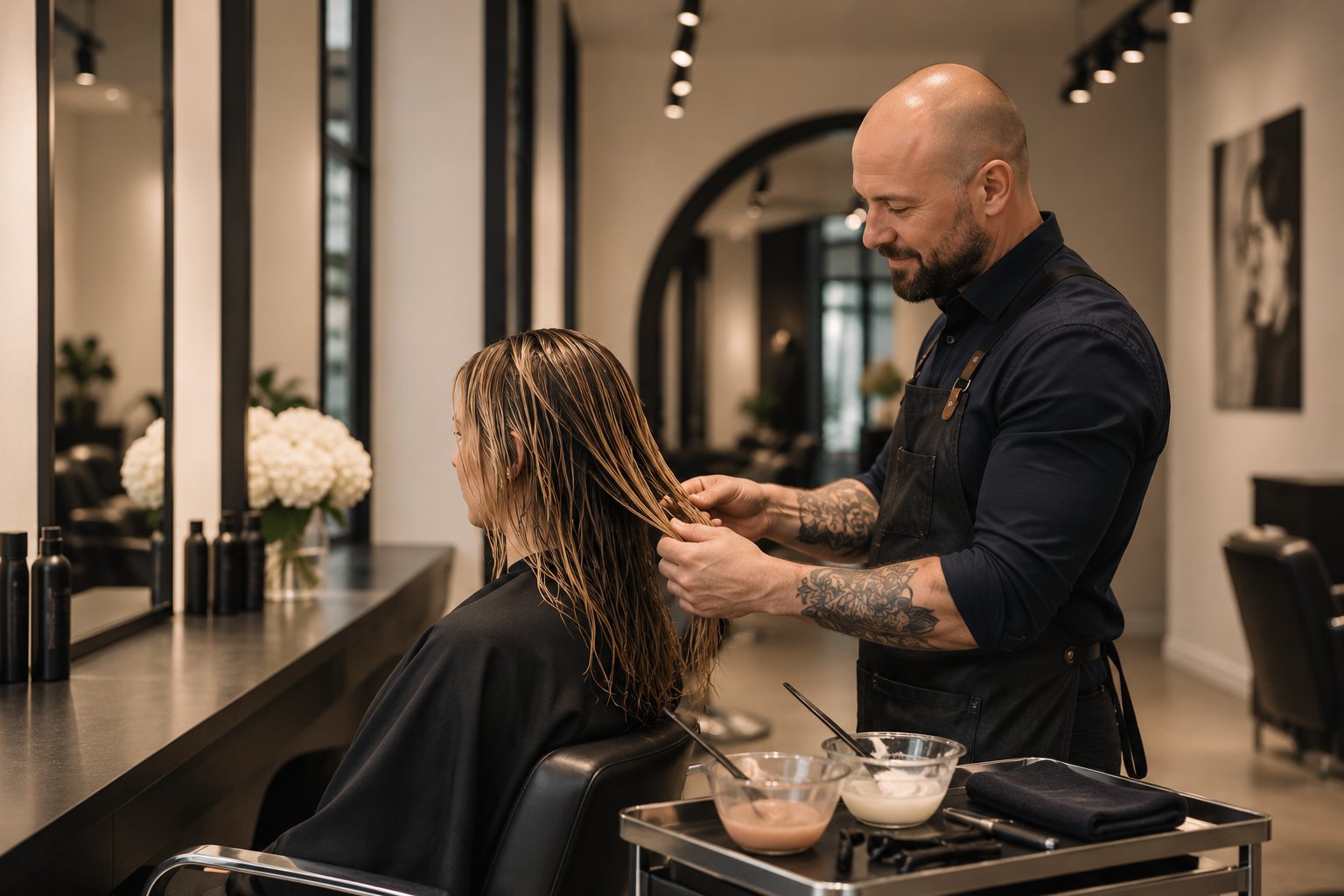
If you want the short answer, toner is mainly for correcting unwanted undertones after hair has been lightened, while gloss is mainly for boosting shine and softly refreshing tone. Neither is automatically better. Much like grey blending vs full coverage, the right choice depends on your starting color, whether your hair has been bleached or highlighted, and whether you need correction or simply a more polished finish. Below, you’ll find a practical decision guide, including where glaze and dye fit in and when professional advice is the safer route.
Choose by result, not by name
| Situation | Best fit | What it does |
|---|---|---|
| Your hair looks yellow, orange, or brassy after lifting | Toner | Refines the undertone and steers the final shade cooler, softer, or more balanced |
| Your hair looks dull, rough, or faded | Gloss | Adds shine, smoothness, and a more polished finish, sometimes with a subtle tone refresh |
| Your hair is natural or already colored, but needs extra vibrancy | Gloss | Works well when the issue is lack of luster rather than strong color correction |
| Your hair has been bleached, highlighted, or lightened and also feels flat | Sometimes both | A service may first correct brassiness, then add shine and softness for a cleaner overall result |
When toner is the smarter choice
Toner is designed to refine undertones, especially the yellow, gold, or orange tones that can appear after bleaching or other lightening services. It is most useful after highlights, balayage, ombré and sombré, or all-over lifting when the shade needs cooling, balancing, or fine-tuning rather than a major color change. In other words, toner is less about creating mirror-like shine and more about controlling how the finished color reads. Because lightened hair is often more porous, toner can take very quickly or unevenly, so formula choice and timing matter. That is why toner tends to be safest when the hair’s condition and starting level are assessed professionally.
When gloss is the better fit
Gloss is usually the better option when hair looks dull, dry, flat, or slightly faded but does not need strong undertone correction. A clear gloss focuses on shine and smoothness, while a tinted gloss can gently refresh an existing shade without behaving like a full permanent color service. That makes gloss useful on natural hair, color-treated hair, and chemically treated hair when the goal is softer-looking texture, easier manageability, and richer-looking color.
It is especially practical between color appointments, after sun or holiday exposure, or before an event when you want hair to look more polished. If your blonde is not noticeably brassy but simply lacks brightness, or your brunette has lost depth and reflection, gloss is often the more elegant choice for avoiding over-processed hair.
Gloss, glaze, toner, and dye: where the terms separate
| Term | Main role | Best for | Commitment level |
|---|---|---|---|
| Color gloss | A shine-led service that may add a small amount of tone | Refreshing faded color, boosting softness, and giving hair a smoother, more reflective finish | Low commitment; it fades gradually and is not the same as permanent dye |
| Glaze | Often used very similarly to gloss, with more emphasis on surface shine and conditioning | Quick polish when hair needs softness and glow more than correction | Usually short-wearing and subtle |
| Toner | Corrects or refines undertones after lifting | Neutralising brassiness or adjusting the cast of blonde, highlighted, or lightened hair | Low to moderate commitment, but more corrective than gloss or glaze |
| Dye | Creates a deeper or longer-lasting pigment change | Changing the hair color more fully, darkening, covering, or shifting the shade with more intent | Higher commitment than gloss, glaze, or toner |
| Which is the gentlest option? | It depends on the result you need | If you only want shine or a soft refresh, gloss or glaze is often the lighter-touch route. If undertones need correcting, toner is more appropriate. If you want a stronger color change, dye is the relevant option. | The least aggressive choice is the one that matches the goal without doing more than necessary |
How long each result lasts and what makes it fade
- Both gloss and toner fade gradually. Neither behaves like permanent color, and exact wear depends on the formula used, your hair’s porosity, and your routine at home.
- Toner tends to fade as washing and daily wear reveal warmth again, especially on lightened hair.
- Gloss usually loses shine and any soft tint over time, so it is often repeated as a maintenance or color-refresh service.
- Frequent washing, UV exposure, chlorine, heat styling, and very porous hair can all make either result fade faster.
- To help results last, use a color-safe cleanser, support the hair with moisture, and apply heat protection before styling.
At home or in the salon? What to know before you apply either one
- The difficult part is rarely the application alone. It is choosing the right formula for the hair’s starting tone, current condition, previous color history, and porosity.
- Gloss is generally more forgiving for home upkeep, especially when the goal is shine or a very soft tone refresh rather than correction.
- Toner carries more risk on freshly lightened, compromised, or highly porous hair. If the formula is too strong, too cool, or left on too long, the result can look uneven, overly ashy, or simply wrong for the base.
- Some stylists do not use a separate toner because the target tone may already be built into the lightening or color service, or because the final refinement is better achieved with a gloss instead. Not every appointment needs both.
- A professional consultation is the safer route when hair is bleached, over-processed, patchy, very porous, or in need of correction rather than a quick refresh.
- In a salon setting, the decision is not only “gloss or toner?” It can also be whether your hair needs a different color service altogether. At Brecht Van Dam, that choice is guided by the starting shade, the condition of the hair, and the finish you want to achieve, and you can contact the salon for professional care selected to support the result.

About the author
Brecht Van Dam
Owner & Art Director
Born in South Africa, Brecht Van Dam discovered his passion for hair styling in Genk and honed his craft at Toni & Guy. Today he runs his own salon in Brussels, with a diverse and international clientele. He believes in sustainable beauty and authenticity: “expressing your authenticity is a sign of resilience.”
Experience: 12 years
Favourite technique: cutting, styling and trend spotting
Languages: Dutch, English and French