


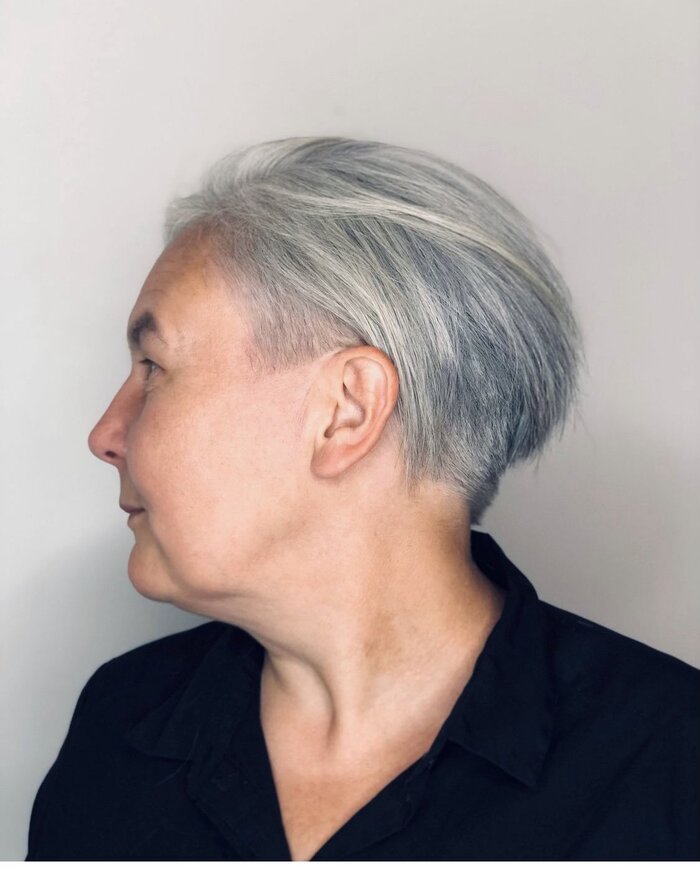
Full coverage is designed to conceal grey for a more even, one-colour result. Grey blending works differently: instead of trying to erase every grey strand, it softens the contrast so the hair keeps more dimension and movement. For most people, the real question is not only how the colour looks on the day of the appointment, but how it behaves between visits.
That is where the difference becomes clear. Full coverage often gives a cleaner root result at first, but regrowth can read more noticeably as new grey comes through. Grey blending usually allows a gentler grow-out, with less of a sharp return line. The best option depends on your grey percentage, where the grey sits, your colour history, and the technique used, not only on whether a formula is permanent, demi, or semi-permanent.
How the finish, regrowth and upkeep differ
| Approach | Finish | Regrowth | Upkeep |
|---|---|---|---|
| Full coverage | Aims for a more uniform result with little to no visible grey. | New grey is often easier to see because the contrast at the root is stronger. | Usually suits people who are comfortable with regular root appointments. |
| Grey blending | Works grey into the overall colour for a softer, more dimensional look. | Grow-out is typically less abrupt because the line of return is softer. | Better for those who prefer flexibility and accept some grey between visits. |
Which path suits your routine, grey pattern and aesthetic
- Look at the pattern of grey, not just the percentage. A few scattered strands behave very differently from concentrated grey at the hairline, crown, or parting.
- Think about the finish you want to see in the mirror. If you prefer a polished, single-colour result, full coverage often makes more sense. If you like softness, movement, or a gradual move toward natural grey, blending is usually the better fit.
- Be realistic about upkeep. Your time between appointments, budget, comfort with seeing some grey, and keeping your scalp healthy all matter as much as the formula itself. If you colour regularly, read what should I do to keep my scalp healthy?
- A colour consultation with clear reference images can help set expectations. At Brecht Van Dam, that kind of conversation helps shape a plan around your starting point, maintenance rhythm, and what is achievable from your current colour history.
What grey blending can involve in practice
- Grey blending is usually created through placement, not one all-over formula. The strategy is to interrupt contrast so grey feels part of the colour rather than separate from it.
- Very fine highlights can brighten selected areas and diffuse obvious streaks of grey, especially where regrowth is most visible.
- Lowlights can add depth back into hair that looks too bright or too sparse, helping the blend feel balanced instead of washed out.
- Glossing or toning can refine the overall tone and add shine. Someone with scattered grey may need only subtle pieces, while stronger grey at the front or parting often calls for a more deliberate combination so the result looks intentional, not patchy.
Stronger, more elastic hair tolerates colour services better over time—support it with habits for longer, healthier hair.
Why a demi or semi-permanent colour is not the same as true blending
A demi or semi-permanent colour can be very useful, but it is not automatically the same as grey blending. These colour types mainly deposit tone, adjust warmth or coolness, add shine, and soften contrast. They do not behave like full permanent grey coverage, and they do not create a dimensional blend on their own.
Grey and white strands can also take colour differently from pigmented hair. Some may grab tone quickly and release it fast, while others resist more than expected. That can affect how the result fades and how visible regrowth feels after a few washes or a few weeks. If buildup from dyes, toners or purple shampoos is dulling your result, consider a periodic detox your scalp and hair.
A softer result comes from the overall colour design: placement, depth, tone, and a clear plan for how the hair should look as it grows out. Demi or semi-permanent colour can be an excellent low-commitment polish, or one part of a gradual transition for people prioritising strategies to avoid over-processed hair, but it may not meet expectations if the goal is true full coverage or a complete grey blend by formula alone.
Common questions before choosing grey blending or coverage
Once the difference is clear, most follow-up questions come down to technique, tone, and how natural or polished you want the result to feel over time.
Does balayage cover grey hair?
Not by itself. Techniques like balayage, ombre and sombre are mainly for soft transitions and lightening, so they are not designed to fully conceal grey at the root. In the right plan, balayage can soften contrast and make some grey less obvious, especially when paired with other colour work. If you have a higher percentage of grey or want a cleaner root result, targeted blending or full coverage is usually more effective.
Will I look older if I let my hair go gray?
Not necessarily. Grey hair alone is not what makes a result feel ageing. Tone, haircut, hair condition, shine, and the contrast between your hair and skin all play a part, especially if you are also dealing with split ends or dryness. What often feels less polished is a strong line between old colour and new growth. A considered blend or transition usually looks more refined because the change feels intentional. Full coverage can also look elegant when the shade suits you and the upkeep remains consistent. The best choice is the one that feels balanced, modern, and manageable for you.
What colors to avoid with grey hair?
The shades to question are usually very flat, very dark, or overly warm tones when they create strong contrast against silver or white regrowth. The least flattering choice is often the one that fights your natural depth, skin tone, or maintenance preference. If you want a softer grow-out, more nuance and dimension usually work better than a dense block of colour.
Is “gray hair” spelled correctly or should it be “grey hair”?
Both are correct. Gray is standard in American English, while grey is more common in British and international English. The spelling changes by region, but the colouring advice does not.

About the author
Brecht Van Dam
Owner & Art Director
Born in South Africa, Brecht Van Dam discovered his passion for hair styling in Genk and honed his craft at Toni & Guy. Today he runs his own salon in Brussels, with a diverse and international clientele. He believes in sustainable beauty and authenticity: “expressing your authenticity is a sign of resilience.”
Experience: 12 years
Favourite technique: cutting, styling and trend spotting
Languages: Dutch, English and French