


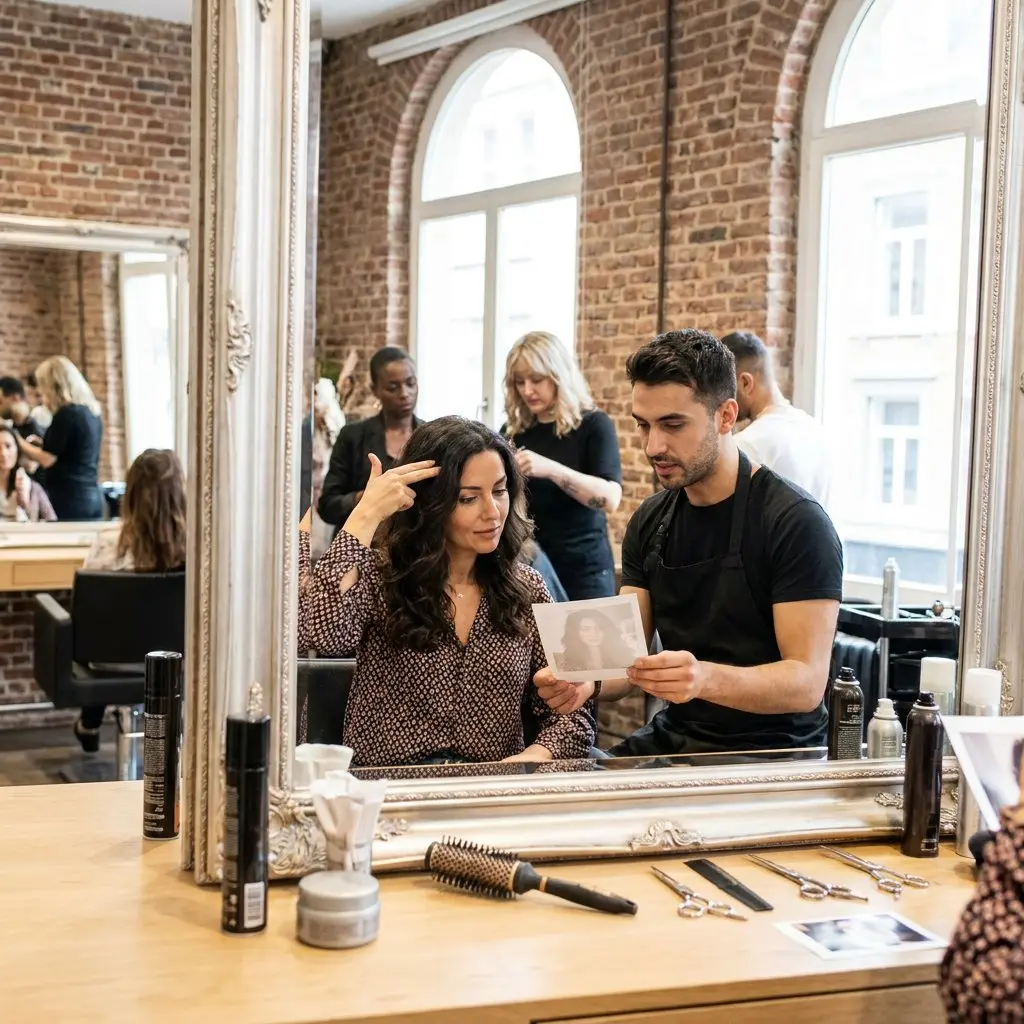
The quickest way to avoid haircut confusion is simple: name the cut, add the length and details such as layers, fringe, parting, or softness versus sharpness, and bring a reference photo. This guide covers the haircut words expats are most likely to hear or need in Brussels salons and barbers. Just remember that vocabulary is only part of it: the same style name can look very different depending on hair texture, density, and how much styling you are willing to do at home.
How to brief your stylist with confidence
- Bring a clear photo, but explain what you like in it and what should be different on your own hair.
- Say how much time you are willing to spend styling each day, because that changes what is practical.
- Be specific about what you do not want as well as what you do want, especially around length, softness, and how to ask for more volume in your hair.
- Leave space for professional feedback on your hair type, face shape, and routine before agreeing on the final plan. If clarifying or build-up comes up, ask how to detox your scalp and hair.
The haircut words you will use most
A style name alone is rarely precise enough. Pair it with length, weight, and finish so your stylist can translate the idea properly.
| Term | What it usually means | What to add |
|---|---|---|
| Blunt cut | One clean, even line with little layering | Say chin, jaw, or collarbone length |
| Layered cut | Shorter sections for movement and lighter weight | Ask where layers should start and how soft they should feel |
| Bob | A shorter shape around jaw to collarbone | Specify blunt, textured, or layered |
| Shag | A more lived-in, layered shape with movement | Mention fringe, texture, and volume |
| Pixie | A short cut with close sides and more shape on top | Add fringe length and neckline preference |
| Bangs / fringe | Hair cut over the forehead; both words mean the same idea | Say full, wispy, curtain, or side-swept |
| Thinning / removing weight | Reducing bulk without taking off much length | Be clear about where you want less volume |
| Shoulder length / wavy | One is a length, the other is a texture description | Use them with a cut name, not instead of one |
| Side part / center part | Where the hair naturally separates | Say which parting you actually wear most |
Barber vocabulary for shorter, cleaner cuts
- Useful short-cut terms include buzz cut, crew cut, pompadour, fade, and taper; each points to a different balance of length, shape, and neatness.
- Barber language is often more clipper-led, while salon cutting is more often scissor-led, so the wording can shift slightly.
- If you want a sharper finish, words like temples, neckline, and parting help define the details.
- Quick trims and classic short cuts are often handled by barbers, but a reference image still makes the result clearer.
When your hair type changes the language
Hair type can change how a stylist interprets the same request. Curly hair, for example, may be cut dry or shaped with a curl-aware approach, so a “bob” or “layers” does not always mean the same thing as it would on straighter hair. Texture, density, and natural movement also affect how bluntness, thinning, and softness behave in practice.
If you have Asian hair, or any texture that is often misunderstood, ask how the stylist plans to remove weight and build shape for that specific density and fall. Visible experience with similar hair matters as much as knowing the style name.
Choosing a stylist and booking a haircut in Brussels
- Check a stylist’s portfolio, recent work, and any listed training or specialisms before booking, especially for precise cuts or curl work.
- Expect price and appointment length to vary with hair length, cut complexity, and whether washing or styling is included.
- Online booking and live availability are common in Brussels. At Brecht Van Dam, appointments can be booked online via Salonkee, but it is still wiser to contact the salon for a short consultation before a major change.
- Regular trims help with grown-out layers and split ends, while DIY corrections often make reshaping more difficult later.
Quick answers to a few terms that still cause confusion
A few phrases still catch people out. These quick answers should make them easier to use. For colour and chemical services, understanding terms like bleach, toner, and double process—and how to avoid over-processed hair—also helps.
What is the Gen Z boy haircut called?
There is no single universal salon term. People may mean a textured crop, curtain cut, two-block, wolf cut, or modern mullet. Trend labels are too broad on their own, so describe the fringe length, taper, texture, and parting you want, and show a photo.
What is a fancy word for hairdresser?
Common labels include hairdresser, hairstylist or stylist, barber, colourist, and in Brussels you may also see the French coiffeur or coiffeuse. The most useful word depends on the service, so naming the cut or colour you need, including balayage, ombré and sombré, is usually clearer than searching for a more elegant title.
What’s slang for haircut?
You may hear trim, chop, buzz, or fresh cut. That works casually, but it is too vague for a salon consultation unless you add the details: how much length to remove if you want longer, healthier hair, whether you want layers or a fringe, and how sharp or soft you want the finish to look.

About the author
Brecht Van Dam
Owner & Art Director
Born in South Africa, Brecht Van Dam discovered his passion for hair styling in Genk and honed his craft at Toni & Guy. Today he runs his own salon in Brussels, with a diverse and international clientele. He believes in sustainable beauty and authenticity: “expressing your authenticity is a sign of resilience.”
Experience: 12 years
Favourite technique: cutting, styling and trend spotting
Languages: Dutch, English and French